Tamales
Tamales
Ingredients
Filling
- 900 g 2 lb pork shoulder (espaldilla)
- 4 cloves 4 cloves garlic
- 1 medium 1 medium onion
- 1 tsp 1 tsp salt
Chile Sauce
- 6 pcs 6 pcs ancho chiles
- 6 pcs 6 pcs guajillo chiles
- 3 cloves 3 cloves garlic
- 1 tsp 1 tsp cumin
- 1 tsp 1 tsp Mexican oregano
- 1 to taste 1 to taste salt
- 15 ml 1 tbsp vegetable oil
Masa Dough
- 500 g 4 cups masa harina
- 250 g 1 cup lard (manteca de cerdo)
- 475 ml 2 cups pork broth (reserved from cooking)
- 2 tsp 2 tsp salt
Assembly
- 1 package, about 30 husks 1 package, about 30 husks dried corn husks (hojas de maíz)
About This Dish
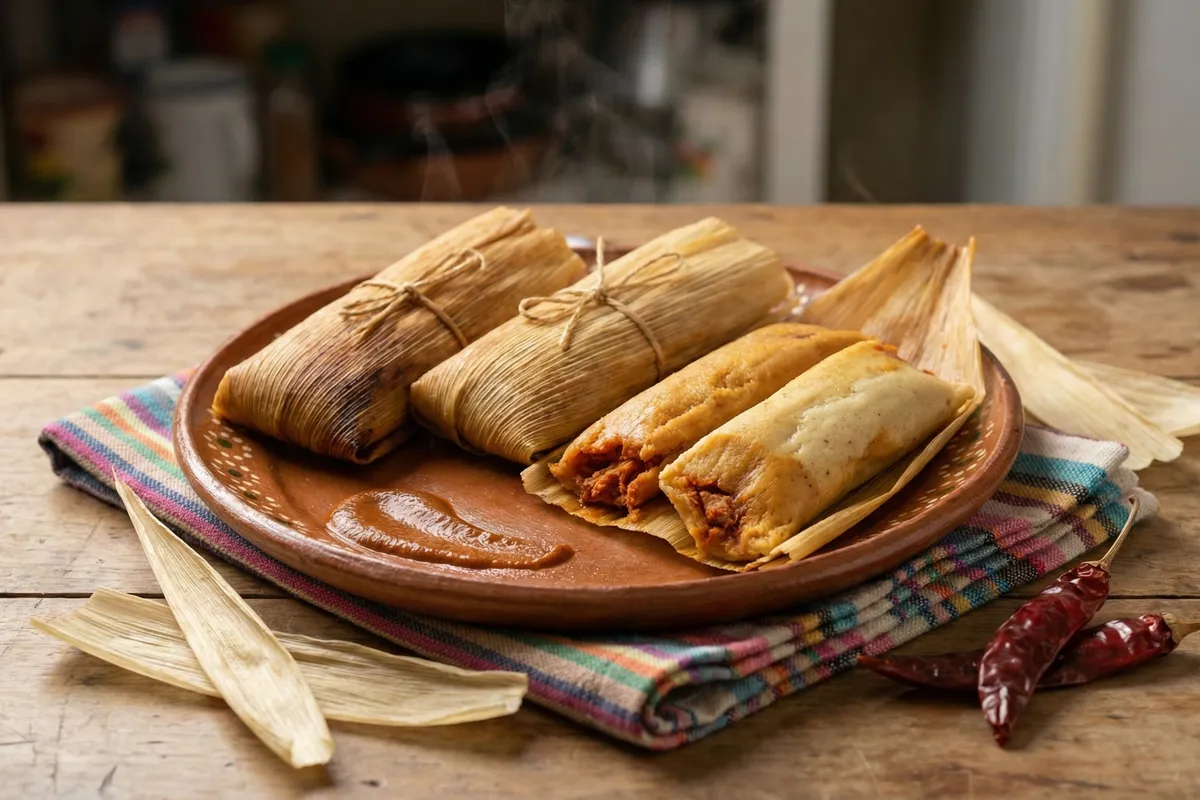
Tamales are one of the oldest foods of the Americas. The word comes from the Nahuatl tamalli, meaning “wrapped,” and archaeological evidence suggests tamales were eaten in Mesoamerica as far back as 8000 BC. Long before the Spanish arrival, the Aztec (Mexica), Maya, and other indigenous peoples made tamales with wild game, beans, and chiles wrapped in corn husks or banana leaves. They were portable, nourishing, and sacred — offered in ceremonies and prepared for festivals tied to the agricultural calendar. Today, tamales remain deeply embedded in Mexican life, eaten year-round but reaching their peak during the winter holiday season.
From mid-December through early February, tamale-making becomes a communal event known as a tamalada. Families and neighbors gather — often across three generations — to soak husks, whip masa, shred meat, and assemble dozens or hundreds of tamales together. A tamalada marks Nochebuena (Christmas Eve), Año Nuevo, and Día de la Candelaria (February 2), when whoever found the figurine in the rosca de reyes is obligated to bring tamales for everyone. These tamales de puerco en chile rojo — pork in red chile sauce — are among the most widespread and beloved versions, found across central and northern Mexico.
Instructions
-
Separate the corn husks and place them in a large pot or basin. Cover with warm water and weigh them down with a plate to keep them submerged. Soak for at least 1 hour, or until the husks are pliable and easy to fold without cracking.
-
Place the pork shoulder in a large pot with the quartered onion, 4 garlic cloves, and 1 tsp salt. Add enough water to cover the meat by about 5 cm (2 inches). Bring to a boil, skim off any foam, then reduce the heat to a gentle simmer. Cook partially covered for about 1.5 hours, until the pork is very tender and shreds easily with a fork.
-
Remove the pork from the broth and let it cool slightly. Strain and reserve the pork broth — you will need it for both the chile sauce and the masa. Shred the pork into small pieces using two forks, discarding any large pieces of fat or gristle.
-
While the pork simmers, prepare the chile sauce. Remove the stems and seeds from the ancho and guajillo chiles. Heat a dry comal or heavy skillet over medium heat. Toast the chiles in batches, pressing them flat with a spatula and turning once, about 15-20 seconds per side. They should become fragrant and slightly darkened but not burnt — burnt chiles turn bitter.
-
Place the toasted chiles in a bowl and cover with hot water. Let them soak for 20-25 minutes until soft and fully rehydrated.
-
Drain the chiles, discarding the soaking water. Transfer to a blender with 3 garlic cloves, 1 tsp cumin, 1 tsp Mexican oregano, and 180 ml (0.75 cups) of the reserved pork broth. Blend until very smooth. For a silkier sauce, strain through a fine-mesh sieve, pressing on the solids with a spoon.
-
Heat 15 ml (1 tbsp) vegetable oil in a saucepan over medium-high heat. Pour in the chile sauce — it will sputter — and cook, stirring constantly, for 4-5 minutes until the sauce darkens slightly and thickens. Season with salt to taste.
-
Combine the shredded pork with enough chile sauce to coat it generously — about two-thirds of the sauce. Reserve the remaining sauce to add to the masa. Taste and adjust the salt. Set the filling aside.
-
For the masa, start by whipping the lard. Place the lard in a large bowl or the bowl of a stand mixer. Beat on medium-high speed for 3-5 minutes until the lard is light, fluffy, and nearly white. This step is essential — properly whipped lard is what makes tamales light rather than dense.
-
In a separate bowl, mix the masa harina with the warm reserved pork broth (about 475 ml / 2 cups) and 2 tsp salt, stirring until a soft dough forms. Add 2-3 tablespoons of the reserved chile sauce to the masa mixture for color and flavor.
-
Add the masa mixture to the whipped lard in batches, beating well after each addition. Continue mixing for another 2-3 minutes. The finished dough should be light and spreadable — moist but not sticky. To test, drop a small spoonful of masa into a cup of cold water. If it floats, the dough is ready. If it sinks, continue beating for another minute and test again.
-
Drain the corn husks and pat them dry. Select the largest, most intact husks for wrapping. Tear a few narrow strips from smaller husks to use as ties if needed.
-
Hold a corn husk with the wide end facing you. Spread about 60 g (0.25 cups) of masa dough in a thin, even layer over the top two-thirds of the husk, leaving a border of about 2 cm (0.75 inches) on each side and the bottom third bare.
-
Place about 1.5 tablespoons of the pork filling in a line down the center of the masa.
-
Fold the left side of the husk over the filling so the masa edges meet, then fold the right side over to enclose the tamale. Fold the empty bottom of the husk up toward the seam. Set the tamale seam-side down, or tie it with a strip of corn husk if it does not stay closed. Repeat with all remaining husks and filling.
-
Prepare a steamer by placing a coin or small metal object in the bottom of a large pot (it will rattle to tell you if the water runs dry). Set a steamer basket or rack inside and line it with a few extra corn husks. Stand the tamales upright in the steamer with the open ends facing up, packing them snugly so they support each other.
-
Cover the tamales with a layer of corn husks and then a clean kitchen towel. Place the lid on tightly. Bring the water to a boil, then reduce to a steady, moderate steam. Steam for 60-75 minutes.
-
To check for doneness, remove one tamale and let it rest for 2-3 minutes. Unwrap it — the masa should pull away cleanly from the husk, be firm and set throughout, and no longer taste raw or doughy. If the masa sticks, re-wrap the tamale and steam for another 10-15 minutes.
-
Once done, turn off the heat and let the tamales rest in the covered steamer for 15 minutes. This resting period helps the masa firm up and makes them easier to unwrap.
Tips
- The float test is the most reliable way to check your masa. If a small ball of dough floats in cold water, the lard has been whipped enough and the dough is properly aerated. Do not skip this step.
- Keep the water in the steamer at a steady simmer, not a rolling boil. Too much steam can make the tamales soggy. If you placed a coin in the pot, listen for it — silence means the water has run low and you need to add more hot water carefully down the side.
- Tamales freeze exceptionally well. Cool them completely, then freeze in a single layer on a baking sheet before transferring to a bag. Reheat by steaming from frozen for 20-25 minutes, or wrapped in a damp paper towel in the microwave for 2-3 minutes.
- The amount of broth in the masa may vary — add it gradually. The dough should be the consistency of thick peanut butter, spreadable but not runny.
- Making tamales alone is a considerable effort. This is traditionally a communal task for good reason — invite others to help and the work goes quickly.
Seasonal Note
Tamales are inseparable from the Mexican winter holiday season. The tamalada tradition stretches from Las Posadas through Nochebuena, Año Nuevo, Día de Reyes, and finally Día de la Candelaria on February 2 — a stretch of weeks defined by family gatherings and shared cooking. Dried chiles, corn husks, masa harina, and lard are all pantry staples available year-round, but they come together most intensely during these cold-weather months, when the slow work of soaking, shredding, spreading, and steaming becomes a ritual in itself. The kitchen fills with the earthy smell of toasted guajillo and ancho chiles, the sweet corn scent of masa, and the deep warmth of hours-long steaming — a sensory marker of winter in Mexico as certain as the posada processions winding through the streets.