Pozole Rojo
Pozole Rojo
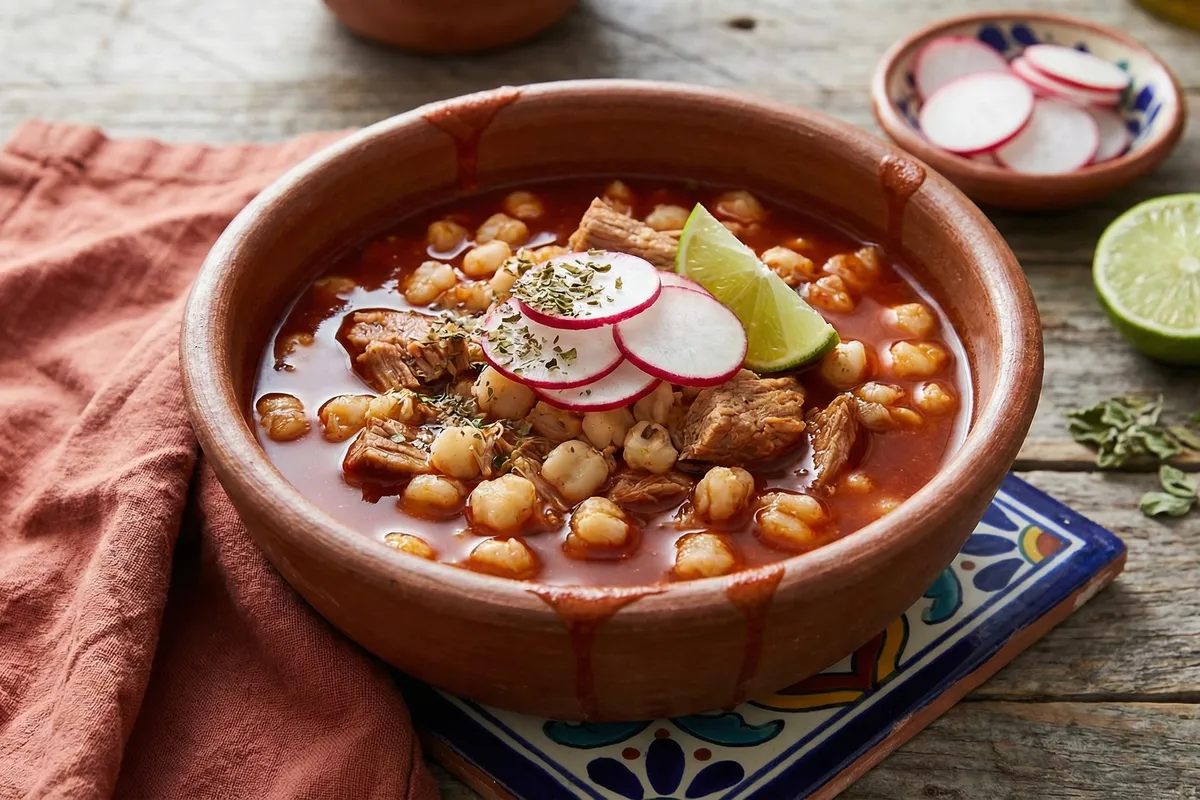
Ingredients
Pork and Broth
- 1.2 kg 2.5 lb bone-in pork shoulder (espaldilla)
- 1 large 1 large white onion, halved
- 6 cloves 6 cloves garlic
- 1 tbsp 1 tbsp salt
- 3 L 12 cups water
Chile Sauce
- 8 chiles (about 60 g) 8 chiles (about 2 oz) dried guajillo chiles, stemmed and seeded
- 4 chiles (about 40 g) 4 chiles (about 1.5 oz) dried ancho chiles, stemmed and seeded
- 3 cloves 3 cloves garlic
- 1 tsp 1 tsp ground cumin
- 1 tsp 1 tsp dried Mexican oregano
- 0.5 tsp 0.5 tsp salt
Pozole
- 1.5 kg (three 500 g cans) 3.3 lb (three 29 oz cans) canned hominy (maíz pozolero), drained and rinsed
- 15 ml 1 tbsp vegetable oil
Garnishes
- 8 medium 8 medium radishes, thinly sliced
- 1 medium 1 medium white onion, finely diced
- 2 tbsp 2 tbsp dried Mexican oregano
- 4 limes 4 limes limes, quartered
- 8 tortillas 8 tortillas corn tortillas (for tostadas)
- 120 ml 0.5 cup vegetable oil (for frying tostadas)
About This Dish
Pozole rojo is one of the great celebratory stews of Mexico, a dish whose roots reach back to the pre-Columbian civilizations of Mesoamerica. The name comes from the Nahuatl word pozolli, meaning “foam” or “frothy,” describing the way nixtamalized corn kernels bloom and rise to the surface as they cook. For the Aztecs, pozole was a sacred, ritual food prepared for important ceremonies and reserved for priests and nobility. After the Spanish conquest, the dish evolved into the pork-and-hominy stew that families across Mexico prepare today for holidays, birthdays, and any occasion worth gathering around the table.
The rojo version — the most widely known of the three varieties (rojo, verde, and blanco) — gets its deep red color and complex flavor from a sauce of dried guajillo and ancho chiles, toasted on a dry comal and rehydrated before blending. Guajillo provides the vivid color and a bright, tangy heat, while ancho contributes a sweeter, rounder depth with notes of dried fruit. The stew is traditionally associated with the states of Jalisco and Guerrero, though every region has its own variation. In Mexican homes, pozole appears reliably at Nochebuena (Christmas Eve), New Year’s celebrations, and Día de la Independencia. It is a dish meant to be shared — cooked in large quantities, ladled into deep bowls, and surrounded by an array of garnishes that each person assembles to their own taste.
Instructions
-
Cut the pork shoulder into four or five large chunks, leaving any bones attached. Place the pork in a large, heavy pot (at least 6 liters / 6 quarts). Add the halved onion, 6 garlic cloves, 1 tablespoon of salt, and the water. Bring to a boil over high heat.
-
As the water comes to a boil, skim off the gray foam that rises to the surface — this keeps the broth clean. Reduce the heat to low, partially cover the pot, and simmer gently for about 1.5 hours, until the pork is completely tender and pulls apart easily with a fork.
-
While the pork simmers, prepare the chile sauce. Heat a dry comal or heavy skillet over medium heat. Working in batches, press each guajillo and ancho chile flat against the hot surface with a spatula for about 15-20 seconds per side. The chiles should become fragrant and pliable, with a few blistered spots. Do not let them blacken or they will turn bitter.
-
Place the toasted chiles in a bowl and cover with very hot water. Let them soak for 20-25 minutes until soft and plump.
-
Drain the chiles, reserving about 250 ml (1 cup) of the soaking liquid. Transfer the softened chiles to a blender along with 3 garlic cloves, the cumin, 1 teaspoon of oregano, 0.5 teaspoon of salt, and the reserved soaking liquid. Blend on high for 2-3 minutes until completely smooth.
-
Strain the chile sauce through a medium-mesh sieve into a bowl, pressing firmly with a spoon to extract all the liquid. Discard the solids. This straining step is important — guajillo skins are tough, and the sauce must be silky.
-
When the pork is tender, remove it from the broth with a slotted spoon and set it on a cutting board. Strain the broth through a fine sieve into a clean pot, discarding the spent onion and garlic. You should have roughly 2-2.5 liters (8-10 cups) of clean broth. Skim any excess fat from the surface.
-
Shred the pork into bite-sized pieces using two forks, discarding any bones, cartilage, or large pieces of fat.
-
Heat the vegetable oil in the clean pot over medium heat. Pour in the strained chile sauce — it will sputter, so stand back. Fry the sauce, stirring constantly, for 4-5 minutes until it darkens slightly and becomes fragrant. This step concentrates the flavor.
-
Pour the strained pork broth into the pot with the fried chile sauce. Add the drained and rinsed hominy. Stir well, bring to a boil, then reduce the heat to low. Return the shredded pork to the pot. Simmer uncovered for 30 minutes, stirring occasionally, to allow the flavors to meld and the hominy to absorb the chile broth.
-
Taste and adjust the salt. The pozole should be deeply savory with a rounded, medium heat from the chiles. The broth should be a rich, opaque red.
-
While the pozole simmers, prepare the tostadas. Pour 120 ml (0.5 cup) of vegetable oil into a small skillet over medium-high heat. When the oil shimmers, fry the corn tortillas one at a time for about 1-2 minutes per side until golden and crisp. Drain on paper towels and sprinkle lightly with salt. Alternatively, use store-bought tostadas.
-
Arrange the garnishes on a large plate or in small bowls: sliced radishes, diced white onion, dried oregano, and lime wedges.
-
Ladle the pozole into deep bowls, making sure each serving gets plenty of hominy, shredded pork, and broth. Serve immediately with the garnishes and tostadas on the side. Each person tops their bowl as they like — a squeeze of lime, a scattering of radishes, a pinch of oregano crushed between the fingers, and a spoonful of diced onion.
Tips
- Dried hominy (maíz pozolero seco) produces superior texture and a more floral corn flavor than canned, but it requires overnight soaking and 2-3 hours of separate cooking before adding it to the stew. If using dried, soak 500 g (1 lb) overnight, then simmer in salted water until the kernels have bloomed open and are tender but still slightly chewy. Substitute this for the canned hominy in step 10.
- Pozole improves overnight. Make it a day ahead and refrigerate — the flavors deepen and the broth develops more body. Reheat gently over low heat, adding a splash of water if the broth has thickened too much.
- The fried chile sauce in step 9 is a technique used across Mexican cooking. Frying the sauce in a small amount of oil before adding the broth concentrates its flavor and removes the raw, sharp edge of the blended chiles. Do not skip this step.
- Leftover pozole keeps refrigerated for up to four days and freezes well for up to three months. The hominy softens slightly upon reheating but remains satisfying.
- If you want more heat, add one or two dried chiles de arbol to the soaking step with the guajillo and ancho chiles. They will add a sharp, clean spiciness.
Seasonal Note
Pozole rojo belongs to the Mexican winter calendar as surely as tamales and ponche. During Las Posadas, the nine nights of processions leading up to Nochebuena, enormous pots of pozole simmer in kitchens across the country, ready to feed family and neighbors who arrive after the evening’s festivities. The dried chiles that define the broth — guajillo and ancho — are year-round pantry staples, but they come into their own in the cold months, when their deep, warming heat is most welcome. The radishes that garnish each bowl are at their peppery peak from November through March. And the hominy itself, nixtamalized corn with 3,500 years of Mesoamerican history, connects the dish to the oldest food traditions of the Americas. To make pozole in winter is to participate in a chain of cooking that stretches back long before the arrival of the Spanish, back to the sacred corn of the Aztec world.