Champurrado
Champurrado
Ingredients
Champurrado
- 1.5 L 6.5 cups water
- 65 g 0.5 cup masa harina
- 90 g 1 tablet Mexican chocolate (chocolate de mesa)
- 115 g 1 small cone piloncillo, chopped or grated
- 1 stick 1 stick cinnamon stick (canela)
- 1 pinch 1 pinch salt
About This Dish
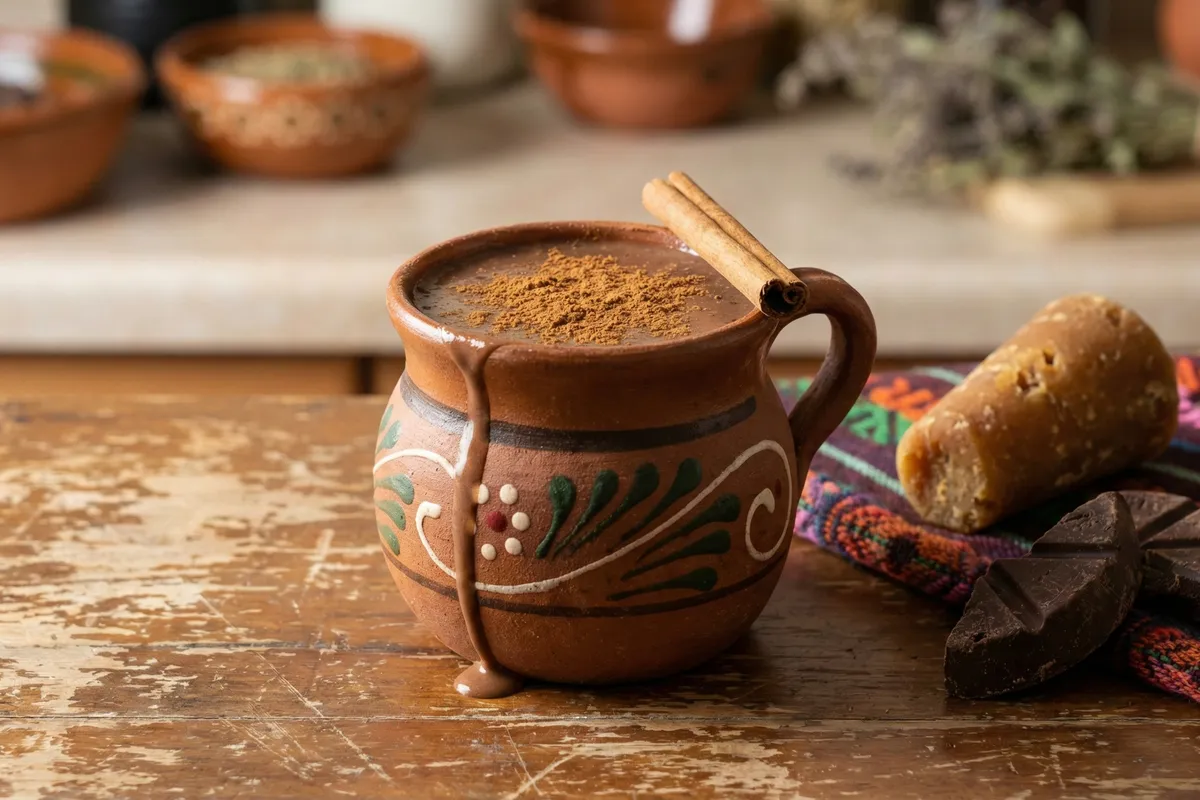
Champurrado is a thick, warm drink made from Mexican chocolate, masa harina, and piloncillo — one of the oldest preparations in the Mexican kitchen. Its roots reach back thousands of years to the Aztec tradition of combining cacao (xocolātl, from Nahuatl) with corn (the sacred grain of Mesoamerica). The Aztecs and Maya drank cacao mixed with ground corn dough long before the Spanish arrived, and champurrado is a direct descendant of those ancient beverages. The name comes from champurrar, meaning to mix or combine, and the drink is a form of atole (from Nahuatl atolli) — the family of warm, masa-thickened beverages that have been made in Mexico for millennia.
Champurrado belongs to the winter holidays. It appears at Las Posadas (December 16-24), on Nochebuena, at Día de Reyes gatherings, and at Candelaria (February 2), almost always alongside tamales. The pairing is so deeply established that you rarely find one without the other during the holiday season. Traditionally, the drink is whisked with a molinillo — a carved wooden whisk rolled between the palms — until thick and frothy. The masa gives it a satisfying body unlike any other hot chocolate, while piloncillo adds a depth of sweetness that refined sugar cannot match.
Instructions
-
Measure 250 ml (1 cup) of the water into a bowl. Add the masa harina and whisk until completely smooth, with no lumps. Set this slurry aside.
-
Pour the remaining 1.25 L (5.5 cups) water into a large saucepan. Add the cinnamon stick and chopped piloncillo. Place over medium heat and stir occasionally until the piloncillo dissolves completely, about 5-8 minutes. The liquid will turn a deep amber.
-
Break the Mexican chocolate tablet into pieces and add them to the pot. Stir until the chocolate melts fully, about 2-3 minutes. The liquid should be a rich, dark brown.
-
Give the masa slurry a stir (it settles quickly) and pour it into the pot in a slow, steady stream, whisking constantly. This prevents lumps from forming.
-
Continue to cook over medium heat, stirring frequently with a whisk, for 12-15 minutes. The champurrado will gradually thicken to the consistency of a thin porridge — it should coat the back of a spoon. If it thickens too much, stir in a splash of hot water.
-
Add a pinch of salt. Taste and adjust sweetness — if you prefer it sweeter, grate in a little more piloncillo and stir until dissolved.
-
Remove the cinnamon stick. If you have a molinillo, place it in the pot and roll it vigorously between your palms for 30 seconds to create a frothy surface. A regular whisk works too — whisk briskly for about a minute.
-
Ladle into mugs and serve immediately while hot and frothy.
Tips
- A molinillo produces the best froth, but a regular balloon whisk or even a hand-held milk frother will work. The goal is to aerate the surface so each cup has a light foam on top.
- The masa slurry must be mixed into cold or room-temperature water first. Adding dry masa harina directly to hot liquid creates stubborn lumps that are difficult to dissolve.
- Champurrado thickens as it sits. When reheating leftovers, add a little water and whisk over medium heat until it loosens back up. It keeps in the refrigerator for 2-3 days.
- Use Ceylon cinnamon (canela), which is the standard in Mexico — softer, more delicate, and easier to grind than cassia cinnamon.
- For a richer version, replace half the water with whole milk. The traditional preparation uses all water, but the milk variation is common in modern Mexican households.
Seasonal Note
Champurrado is inseparable from the Mexican winter calendar. From the first Posada procession in mid-December through Candelaria on February 2, large pots of champurrado simmer alongside steaming towers of tamales at family gatherings, church celebrations, and street vendors’ stalls. Masa harina and dried corn products are the backbone of winter cooking — the same nixtamalized corn that makes tamale dough also thickens this drink. Piloncillo and Mexican chocolate, both pantry staples that keep indefinitely, make champurrado a drink that requires no special shopping, only the occasion to gather and share something warm.