Ribollita
Ribollita
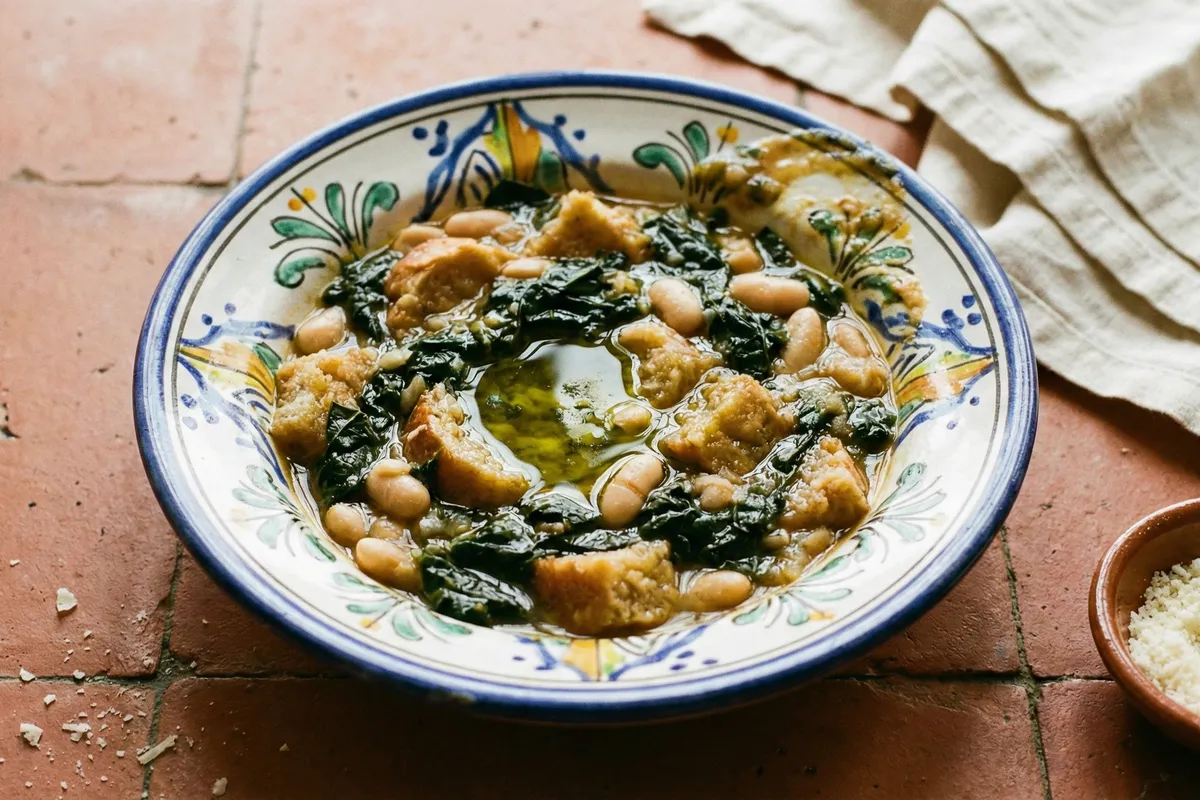
Ingredients
Soup Base
- 300 g 1.5 cups dried cannellini beans
- 60 ml 4 tbsp extra virgin olive oil
- 100 g 3.5 oz pancetta
- 2 medium 2 medium onion
- 4 cloves 4 cloves garlic
- 2 sprigs 2 sprigs rosemary
- 4 leaves 4 leaves sage
- 2 leaves 2 leaves bay leaf
- 0.5 tsp 0.5 tsp red chili flakes
- 400 g 14 oz San Marzano tomatoes (canned, whole)
- 1 to taste 1 to taste salt
- 1 to taste 1 to taste black pepper
Greens and Bread
- 500 g 1.1 lb cavolo nero (Tuscan kale)
- 300 g 10.5 oz stale country bread (pane raffermo)
To Finish
- 1 to taste 1 to taste extra virgin olive oil (Tuscan, for drizzling)
- 60 g 0.75 cups Parmigiano Reggiano DOP
About This Dish
Ribollita (literally “reboiled”) is the definitive soup of Tuscan cucina povera — peasant cooking elevated through patience and good ingredients. Born in Florence and the surrounding countryside, it began as a way to stretch yesterday’s minestrone by reboiling it with stale bread until the soup became thick enough to eat with a fork. The name tells you everything about its origins: this is food made from leftovers, transformed into something greater than the sum of its parts.
What separates ribollita from a simple vegetable soup is the bread. Stale, unsalted Tuscan bread (pane toscano) absorbs the cooking liquid and breaks down into the broth, creating a dense, porridge-like texture that is closer to a stew than a soup. Cavolo nero (Tuscan kale) is the other non-negotiable ingredient — its deep, mineral bitterness softens into something rich and sweet after long simmering. Tuscans have eaten this combination of bread, beans, and dark greens for centuries, and the dish remains a fixture of winter tables across the region.
Instructions
-
Soak the dried cannellini beans in cold water overnight, or for at least 8 hours. Drain and rinse.
-
Place the soaked beans in a large pot, cover with fresh cold water by about 8 cm (3 inches), and add 1 bay leaf and 1 sprig of rosemary. Bring to a gentle boil, then reduce the heat and simmer uncovered until the beans are tender and creamy, about 45-60 minutes. Skim any foam that rises. Season lightly with salt in the last 10 minutes. Remove the bay leaf and rosemary.
-
Drain the beans, reserving all the cooking liquid. Set aside about a third of the beans. Puree the remaining two-thirds with a few spoonfuls of the cooking liquid until smooth. This puree will thicken the soup.
-
While the beans cook, prepare the cavolo nero. Strip the leaves from the tough central stems and discard the stems. Tear the leaves into rough pieces, about 5 cm (2 inches) across. You should have a large mound — it will cook down significantly.
-
Dice the pancetta into small pieces, about 5 mm (0.25 inch). Finely chop the onion and garlic. Pick the rosemary leaves from the remaining sprig and chop them finely. Keep the sage leaves whole.
-
Heat 60 ml (4 tbsp) extra virgin olive oil in a large, heavy-bottomed pot over medium-low heat. Add the pancetta and cook slowly, stirring occasionally, until the fat has rendered and the pancetta is golden, about 8 minutes.
-
Add the onion and a pinch of salt. Cook, stirring often, until the onion is soft and translucent, about 10 minutes. Add the garlic, chopped rosemary, sage leaves, remaining bay leaf, and red chili flakes. Cook for another 2 minutes until fragrant.
-
Crush the San Marzano tomatoes by hand directly into the pot, discarding the hard core at the stem end. Add the juices from the tin as well. Stir and cook for 5 minutes until the tomatoes begin to break down.
-
Add the cavolo nero to the pot in batches, stirring each batch until it wilts enough to fit the next. Once all the greens are in, pour in 500 ml (2 cups) of the reserved bean cooking liquid. Bring to a simmer.
-
Stir in the bean puree and the whole reserved beans. If the soup is very thick, add more bean cooking liquid — you want it loose enough to simmer gently, knowing the bread will absorb much of the liquid. Season with salt and freshly ground black pepper. Simmer, partially covered, for 25-30 minutes, stirring occasionally.
-
Tear the stale bread into rough chunks. Stir the bread into the soup, pressing it down so it is submerged. The bread should begin to dissolve into the soup. Cook for another 10 minutes, stirring frequently to prevent sticking.
-
Remove the pot from the heat. Fish out the bay leaf and sage leaves. Cover and let the soup rest for at least 15 minutes — longer is better. Ribollita improves as it sits.
-
To serve, ladle into bowls. Drizzle generously with your best Tuscan extra virgin olive oil and finish with freshly grated Parmigiano Reggiano DOP. The soup should be very thick, closer to a stew, and the bread should have completely melted into the broth.
Tips
- Ribollita is better the next day. If time allows, make the full recipe a day ahead, refrigerate it overnight, then reheat (reboil) it gently the following day. This is the traditional method and the reason for the name.
- Use genuinely stale bread, not toasted bread. Unsalted Tuscan bread (pane toscano) is traditional because its neutral flavor lets the vegetables shine. Any sturdy, day-old country bread with a good crust will work.
- Do not skimp on the olive oil at the end. A generous pour of peppery Tuscan extra virgin olive oil is not a garnish — it is an essential part of the dish.
- The soup should be thick enough that a wooden spoon stands up in it. If it seems too loose, cook it uncovered for a few more minutes. If too thick, add a splash of bean cooking liquid.
- Some Tuscan cooks bake the finished ribollita in the oven at 180C (350F) for 20 minutes to form a crust on top. This is an excellent variation worth trying.
Seasonal Note
Ribollita belongs to the coldest months in Tuscany, when cavolo nero is at its peak after the first frosts have sweetened its leaves. The soup draws on the winter pantry that has sustained Tuscan households for generations: dried cannellini beans, canned San Marzano tomatoes, cured pancetta, and the woody herbs — rosemary, sage, and bay leaf — that grow through the cold months. It is a dish built around patience and thrift, turning yesterday’s bread and a handful of humble ingredients into one of the most satisfying meals of the Italian winter.