Pappardelle al Ragu di Cinghiale
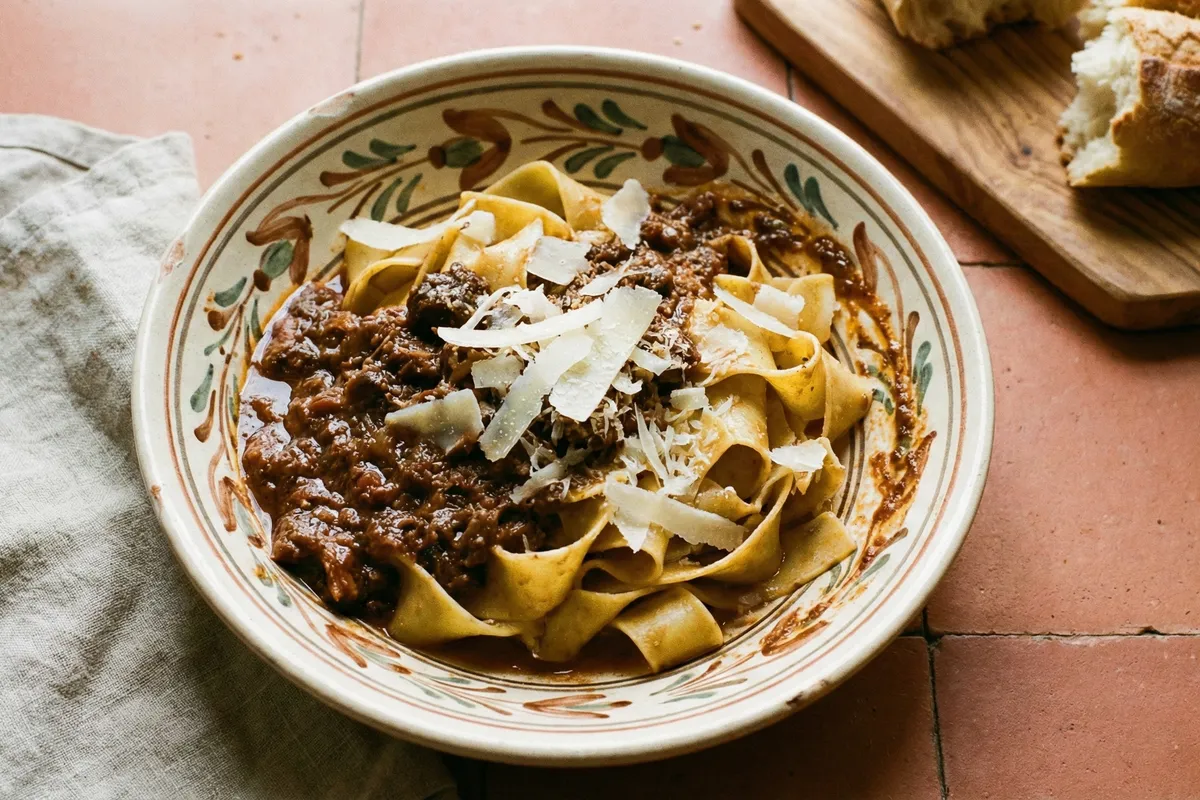
Pappardelle al ragù di cinghiale
Ingredients
Wild Boar Ragù
- 800 g 1.75 lb wild boar shoulder, cut into 3 cm pieces
- 500 ml 2 cups dry red wine (Chianti or Montepulciano)
- 2 medium 2 medium onion, finely diced
- 3 cloves 3 cloves garlic cloves, minced
- 80 g 3 oz pancetta, finely diced
- 400 g 14 oz San Marzano DOP tomatoes, canned whole
- 30 g 2 tbsp tomato paste
- 20 g 0.75 oz dried porcini mushrooms
- 45 ml 3 tbsp extra virgin olive oil
- 2 sprigs 2 sprigs fresh rosemary sprigs
- 4 leaves 4 leaves fresh sage leaves
- 2 leaves 2 leaves bay leaves
- 2 tsp 2 tsp salt
- 1 tsp 1 tsp black pepper, freshly ground
- 0.5 tsp 0.5 tsp red chili flakes
Pappardelle
- 500 g 1.1 lb dried pappardelle
- 15 g 1 tbsp salt, for pasta water
To Serve
- 80 g 1 cup Parmigiano Reggiano DOP, finely grated
- 15 ml 1 tbsp extra virgin olive oil, for finishing
About This Dish
Pappardelle al ragù di cinghiale is one of Tuscany’s defining winter dishes. Wild boar (cinghiale) has roamed the forests and hills of central Italy for millennia, and the tradition of hunting it during the autumn and winter months remains deeply embedded in Tuscan and Umbrian life. The ragù — a slow-cooked meat sauce built on red wine, tomatoes, and dried porcini — is the kind of cooking that requires patience rather than skill. It simmers for hours, filling the kitchen with the scent of wine and rosemary, and rewards that patience with extraordinary depth of flavor.
Pappardelle are the correct pasta for this ragù. The wide, flat ribbons — typically 2 to 3 cm across — catch the chunky sauce and stand up to the intensity of the wild boar. In the structure of an Italian meal, this is a primo (first course), though the richness of the dish means it often serves as the centerpiece. The meat is traditionally marinated overnight in red wine with herbs, a step that tames the gaminess of the boar and infuses it with flavor before it ever reaches the pan. Dried porcini mushrooms (porcini secchi), soaked and stirred in during cooking, add a layer of woodsy umami that ties the sauce to the Tuscan forest floor where the boar itself feeds.
Instructions
-
Cut the wild boar shoulder into roughly 3 cm (1 inch) pieces. Place the meat in a large bowl and pour over 500 ml (2 cups) of red wine. Add the rosemary sprigs, sage leaves, and bay leaves. Cover and refrigerate for at least 8 hours or overnight. This marinating step is important — it softens the meat and mellows the strong, gamey flavor of the boar.
-
Place the dried porcini mushrooms in a small bowl and cover with 250 ml (1 cup) of warm water. Let them soak for at least 30 minutes. Once softened, lift the mushrooms out with a fork, chop them roughly, and set aside. Strain the soaking liquid through a fine-mesh sieve or coffee filter to catch any grit. Reserve this liquid — it is full of flavor.
-
Remove the meat from the marinade. Strain the marinade through a sieve, reserving the wine and the herbs separately. Pat the meat thoroughly dry with paper towels. Season it with 1 tsp of the salt and half the black pepper.
-
Heat 30 ml (2 tbsp) of the extra virgin olive oil in a large, heavy-bottomed Dutch oven or casserole over medium-high heat. Working in batches to avoid crowding the pan, brown the boar pieces on all sides, about 3 to 4 minutes per batch. The meat should develop a deep, dark crust. Transfer each batch to a plate.
-
Reduce the heat to medium. Add the remaining 15 ml (1 tbsp) olive oil and the diced pancetta. Cook for 3 to 4 minutes, stirring occasionally, until the pancetta has rendered its fat and begun to turn golden.
-
Add the diced onions to the pan. Cook for 8 to 10 minutes, stirring occasionally, until the onions are soft and translucent. Add the garlic and cook for another minute until fragrant.
-
Stir in the tomato paste and cook for 1 to 2 minutes, letting it darken slightly in the pan. This concentrates its flavor.
-
Pour in the reserved marinade wine and stir well, scraping up any browned bits from the bottom of the pan. Bring to a boil and let it reduce by about one third, roughly 5 to 7 minutes. This cooks off the raw alcohol and intensifies the wine flavor.
-
Crush the San Marzano DOP tomatoes by hand and add them to the pan along with their juices. Add the chopped porcini mushrooms and their strained soaking liquid. Return the browned boar and any accumulated juices to the pot. Tuck in the reserved rosemary, sage, and bay leaves. Add the red chili flakes and the remaining 1 tsp salt.
-
Stir everything together and bring the liquid to a gentle simmer. Cover the pot with the lid slightly ajar and reduce the heat to low. The ragù should barely bubble — a few lazy bubbles breaking the surface every few seconds. Cook for 2.5 to 3 hours, stirring every 30 minutes or so to prevent sticking. The ragù is done when the meat is tender enough to break apart easily with a wooden spoon and the sauce has thickened into a rich, dark coating consistency.
-
When the ragù is nearly finished, remove and discard the rosemary stems, sage leaves, and bay leaves. Using two forks, shred the larger pieces of boar directly in the pot. Some pieces will have already fallen apart — this is good. The texture should be a mix of shredded and small chunks. Taste and adjust the salt and pepper.
-
Bring a large pot of water to a rolling boil. Add 15 g (1 tbsp) of salt — the water should taste noticeably salty. Cook the dried pappardelle according to the package instructions until al dente. Reserve 250 ml (1 cup) of the starchy pasta cooking water before draining.
-
Drain the pappardelle and add it directly to the pot of ragù. Toss the pasta with the sauce over low heat for 1 to 2 minutes, adding splashes of the reserved pasta water as needed to help the sauce coat every ribbon. The sauce should cling to the pappardelle, not pool at the bottom of the bowl.
-
Serve immediately in warmed bowls. Top each portion with a generous scattering of finely grated Parmigiano Reggiano DOP and a thin drizzle of extra virgin olive oil.
Tips
- Wild boar can be ordered from specialty butchers, game meat suppliers, or online. If unavailable, pork shoulder makes a reasonable substitute, though the flavor will be milder and less complex. Venison is a closer match in character.
- The overnight wine marinade makes a real difference with wild boar. Do not skip it. The wine breaks down the dense muscle fibers and carries the herb flavors deep into the meat. If pressed for time, marinate for a minimum of 4 hours.
- Dried pappardelle works well here and is what most Italian home cooks use on a weeknight. If you want to make fresh pappardelle, combine 400 g (3.25 cups) tipo 00 flour with 4 eggs, knead into a smooth dough, rest for 30 minutes, and roll thin before cutting into wide ribbons about 2 to 3 cm across.
- This ragù improves with time. Make it a day or two ahead, refrigerate, and reheat gently. The flavors deepen and meld overnight. It also freezes well for up to 3 months.
- Wild boar must be cooked fully through — there is no serving it rare or medium. The long, slow braise ensures the meat is thoroughly cooked while remaining tender.
Seasonal Note
Wild boar hunting season in Tuscany and Umbria runs from autumn through winter, making cinghiale a fixture of the cold-weather table. The dish belongs to the rhythm of the season: the long, slow braise suits the pace of a winter day, and the hearty result is exactly what the body wants when temperatures drop. Every ingredient in the pot reflects the winter pantry — dried porcini preserved from the autumn harvest, canned San Marzano tomatoes put up at the end of summer, robust red wine, and hardy rosemary that thrives through the coldest months. This is the kind of cooking that rewards stillness and time, two things winter provides in abundance.