Orecchiette con Cime di Rapa
Orecchiette con cime di rapa
Ingredients
Pasta and Greens
- 400 g 14 oz dried orecchiette
- 500 g 1.1 lb broccoli rabe (cime di rapa)
- 1 to taste 1 to taste salt
Sauce
- 80 ml 5.5 tbsp extra virgin olive oil
- 3 cloves 3 cloves garlic
- 6 fillets 6 fillets anchovy fillets (oil-packed)
- 0.5 tsp 0.5 tsp red chili flakes
To Finish
- 1 to taste 1 to taste extra virgin olive oil (for drizzling)
- 40 g 0.5 cups Pecorino Romano DOP (finely grated)
- 30 g 0.33 cups breadcrumbs (toasted, optional)
About This Dish
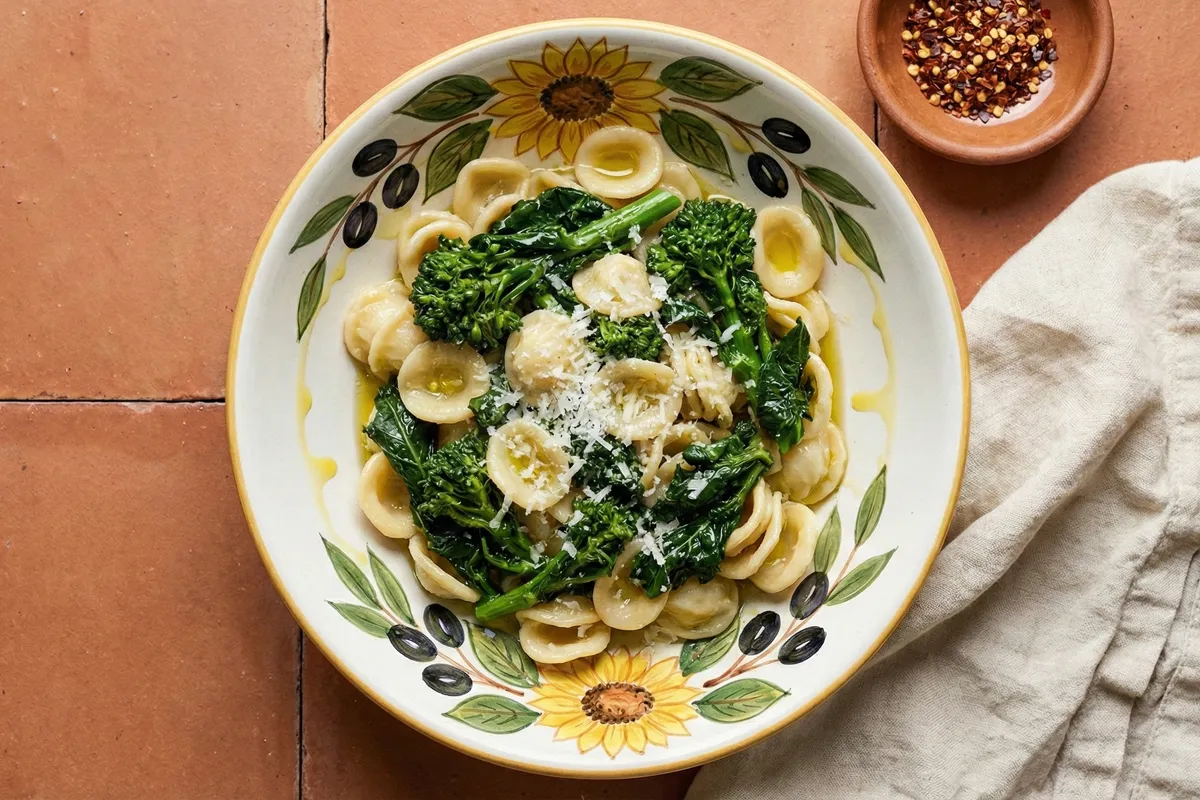
Orecchiette con cime di rapa is the signature pasta of Puglia and one of the most iconic dishes of southern Italian cooking. In the old quarter of Bari, along the Strada delle Orecchiette (Arco Basso), women still sit outside their doorways shaping these small ear-shaped pasta by hand from durum wheat and water — the same way they have for generations. The dish pairs orecchiette with cime di rapa (broccoli rabe), the bitter, peppery winter green that defines Pugliese cooking from October through early spring.
The genius of this dish is its simplicity and the balance of its flavors. Bitter greens meet salty anchovies that dissolve entirely into the olive oil, creating deep umami without any overt fishiness. Garlic and peperoncino add warmth. Generous extra virgin olive oil — Puglia produces more olive oil than any other Italian region — ties everything together. The orecchiette shape is not decorative: the concave “little ears” cup the small florets and bits of tender stem, catching sauce in their hollows. This is a primo, and it needs nothing before or after it except perhaps a glass of Primitivo.
Instructions
-
Prepare the cime di rapa. Trim off the thick, woody lower stems — about the bottom 5 cm (2 inches). Separate the tender florets, thin upper stems, and leaves. Discard any yellowed or wilted leaves. Wash everything thoroughly in cold water, as the florets tend to trap grit. Cut any large pieces so they are roughly similar in size.
-
Bring a large pot of water to a rolling boil. Salt it generously — it should taste like the sea. This single pot of water will cook both the greens and the pasta.
-
Add the cime di rapa to the boiling water. Cook for 3-4 minutes, until the stems are just tender and the florets are bright green. Use a slotted spoon or spider strainer to lift the greens out of the water and transfer them to a bowl. Do not discard the cooking water.
-
While the greens cook, prepare the sauce. Thinly slice the garlic. Heat 80 ml (5.5 tbsp) extra virgin olive oil in a large, deep skillet over medium-low heat. Add the garlic and cook gently, stirring, until it turns pale gold and fragrant, about 2 minutes. Do not let it brown.
-
Add the anchovy fillets to the skillet. Press them with a wooden spoon as they cook — they will dissolve completely into the oil within about 1 minute. Add the red chili flakes and stir for another 30 seconds.
-
Add the blanched cime di rapa to the skillet. Toss to coat in the anchovy oil. Cook over medium heat for 2-3 minutes, stirring occasionally, letting the greens absorb the flavors. Add a splash of the green cooking water if the pan looks dry. Remove from heat.
-
Return the cooking water to a rolling boil. Add the orecchiette and cook according to the package instructions until al dente, typically 10-12 minutes. Reserve about 250 ml (1 cup) of the starchy pasta water before draining.
-
Add the drained orecchiette directly to the skillet with the cime di rapa. Return the skillet to medium heat. Toss everything together vigorously for 1-2 minutes, adding splashes of the reserved pasta water as needed to create a glossy sauce that clings to the pasta. The starch in the water will help emulsify with the olive oil.
-
Remove from heat. Drizzle with a generous pour of extra virgin olive oil. Serve in warmed bowls with finely grated Pecorino Romano DOP. If using toasted breadcrumbs (pangrattato), scatter them over each serving — this is a traditional Pugliese addition, sometimes called “the poor man’s Parmigiano.”
Tips
- To prepare the optional toasted breadcrumbs, heat a thin film of olive oil in a small skillet over medium heat. Add the breadcrumbs and stir constantly until they turn deep golden and crisp, about 3-4 minutes. Season with a pinch of salt. They burn quickly, so stay attentive.
- Cime di rapa varies in bitterness. If you prefer a milder flavor, blanch the greens for an extra minute. If you enjoy the bitterness — as Pugliese cooks do — keep the blanching time short.
- Cooking the greens in the pasta water is not just efficient, it is the traditional technique. The greens flavor the water, and the pasta absorbs that flavor as it cooks. The extra starch from both greens and pasta also makes the cooking water better for emulsifying the sauce.
- If cime di rapa is unavailable, broccolini is the closest substitute. It is milder in flavor but works well with the same preparation.
- This dish is best served immediately. The pasta continues to absorb moisture as it sits. Leftovers can be reheated in a skillet with a splash of water and a drizzle of olive oil, though the texture will soften.
Seasonal Note
Cime di rapa reaches its peak through the Pugliese winter, from late autumn into early spring. The cold weather concentrates the greens’ characteristic bitterness and strengthens their peppery bite — qualities that Pugliese cooks consider a virtue, not a flaw. This is one of those dishes that exists because of its season: the greens are abundant and cheap at winter markets across southern Italy, and the pantry provides everything else — dried pasta, olive oil, a few anchovies, garlic, and chili. It is cucina povera at its most essential, turning a handful of winter ingredients into a dish that has represented an entire region for centuries.