Avgolemono
Αυγολέμονο
Ingredients
Soup
- 1.5 kg 3.3 lb whole chicken
- 1 large 1 large onion
- 2 cloves 2 cloves garlic
- 30 ml 2 tbsp olive oil
- 1 to taste 1 to taste salt
- 1 to taste 1 to taste black pepper
- 150 g 0.75 cups rice (medium-grain)
Avgolemono Sauce
- 3 large 3 large eggs
- 3 medium 3 medium lemons (juice only)
To Finish
- 1 to taste 1 to taste extra virgin olive oil
- 1 to taste 1 to taste black pepper
- 1 for serving 1 for serving lemon wedges
About This Dish
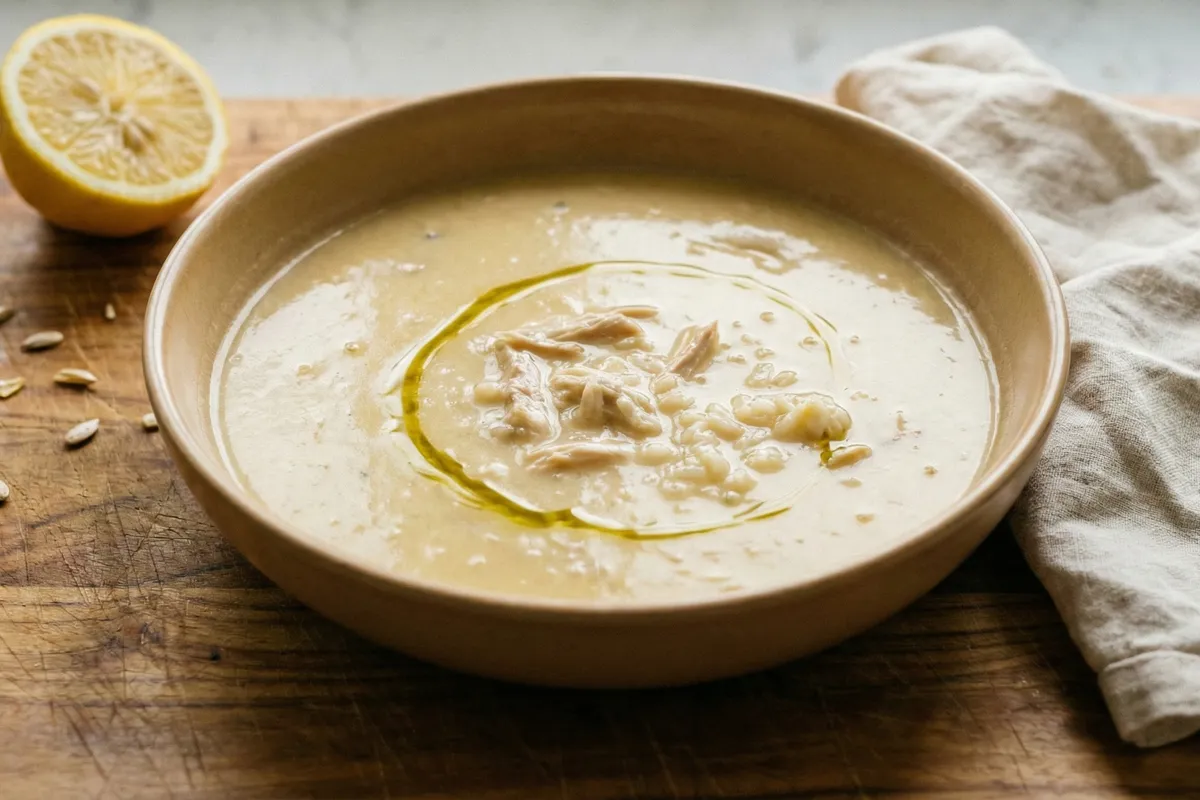
Avgolemono (αυγολέμονο, egg-lemon) is one of the most distinctive and beloved preparations in all of Greek cooking. The name tells you exactly what it is: avgo (egg) and lemoni (lemon), whisked together into a silky liaison that transforms a simple chicken and rice soup into something velvety and bright. Found on family tables across every region of Greece, it is the soup Greek grandmothers make when someone is cold, tired, or unwell. It is also the first meal many families share after the midnight Easter service, served alongside magiritsa or on its own to break the Lenten fast.
The technique is ancient and shared across the eastern Mediterranean, but it is the Greek kitchen that made avgolemono its own, applying the sauce not just to this soup but to stews, stuffed cabbage rolls, and braised vegetables. The key is tempering: ladling hot broth slowly into the beaten egg-lemon mixture so the eggs warm gradually and emulsify rather than scramble. Done right, the result is a soup with the body of cream but no cream at all — just eggs, lemon, and good broth.
Instructions
-
Place the whole chicken in a large pot. Add the onion (peeled and halved), garlic cloves, a generous pinch of salt, and the olive oil. Cover with about 2.5 litres (10 cups) of cold water. The water should cover the chicken by a few centimetres.
-
Bring to a boil over high heat. As soon as it boils, reduce the heat to a gentle simmer. Skim any foam that rises to the surface in the first few minutes. Partially cover the pot and simmer until the chicken is cooked through and tender, about 50-60 minutes.
-
Carefully remove the chicken from the pot and set it on a cutting board to cool slightly. Strain the broth through a fine-mesh sieve into a clean pot, discarding the onion and garlic. You should have about 2 litres (8 cups) of clear, golden broth. If you have more, that is fine.
-
Bring the strained broth back to a gentle boil. Add the rice, stir once, and cook at a steady simmer until the rice is tender, about 15-18 minutes.
-
While the rice cooks, shred the chicken meat from the bones, discarding the skin and bones. Tear the meat into bite-sized pieces.
-
Once the rice is cooked, stir the shredded chicken into the pot. Reduce the heat to the lowest setting. The soup should be barely steaming, not simmering — this is important for the next step.
-
Prepare the avgolemono: crack the eggs into a medium bowl and whisk vigorously until frothy and lightened in colour, about 1 minute. Add the juice of the 3 lemons (you should have roughly 80-100 ml / 1/3 cup) and whisk again until fully combined.
-
Now temper the eggs. Using a ladle, scoop out about 250 ml (1 cup) of the hot broth. While whisking the egg-lemon mixture constantly, pour the hot broth in a very slow, thin stream into the bowl. This raises the temperature of the eggs gradually so they will not curdle.
-
Repeat with one or two more ladles of broth, whisking constantly, until the egg mixture is warm to the touch.
-
Pour the tempered egg-lemon mixture back into the pot in a steady stream, stirring the soup gently as you pour. The soup will turn from clear golden to a pale, creamy yellow.
-
Stir gently over low heat for 2-3 minutes to let the soup thicken slightly. Do not let it boil — boiling will curdle the eggs. The soup is ready when it coats the back of a spoon. Season with salt and freshly ground black pepper.
-
Ladle into bowls. Finish each serving with a drizzle of your best extra virgin olive oil, a grinding of black pepper, and a lemon wedge on the side.
Tips
- The tempering step is the only part that requires attention. Go slowly, whisk constantly, and keep the heat low. If you rush or let the soup boil after adding the egg mixture, you will end up with egg drop soup instead of a silky avgolemono.
- Use medium-grain rice, not long-grain or basmati. Medium-grain rice releases more starch, which contributes to the soup’s creamy body. Arborio works well if you cannot find Greek medium-grain.
- Fresh lemon juice only. Bottled juice lacks the fragrance and brightness that make this soup what it is.
- Avgolemono thickens considerably as it cools. When reheating leftovers, add a splash of broth or water and warm gently over low heat, stirring often. Never reboil it.
- Some cooks use only egg yolks (3-4 yolks instead of whole eggs) for an even richer, silkier result. This is a fine variation and closer to some older recipes.
Seasonal Note
Avgolemono is winter cooking at its most essential. Greek lemons reach their peak from November through March, heavy with juice and intensely fragrant — the Peloponnese and Crete produce them in abundance. Chicken, a staple of Greek home kitchens year-round, becomes the foundation for this warming broth. The soup captures the spirit of Greek winter tables: a few good ingredients, an unhurried technique, and the sharp brightness of lemon cutting through the cold. It is the kind of dish that exists in nearly every Greek household’s repertoire, made slightly differently each time, but always built on the same simple alchemy of egg, lemon, and patient broth.