Poires Pochées au Vin Rouge
Poires Pochées au Vin Rouge
Ingredients
Poached Pears
- 4 whole 4 whole pears (firm, such as Conférence or Comice)
- 750 ml 3.25 cups dry red wine
- 150 g 0.75 cup sugar
- 1 pod 1 pod vanilla
- 1 leaf 1 leaf bay leaf
- 4 whole peppercorns 4 whole peppercorns black pepper
To Serve (Optional)
- 120 ml 0.5 cup crème fraîche
About This Dish
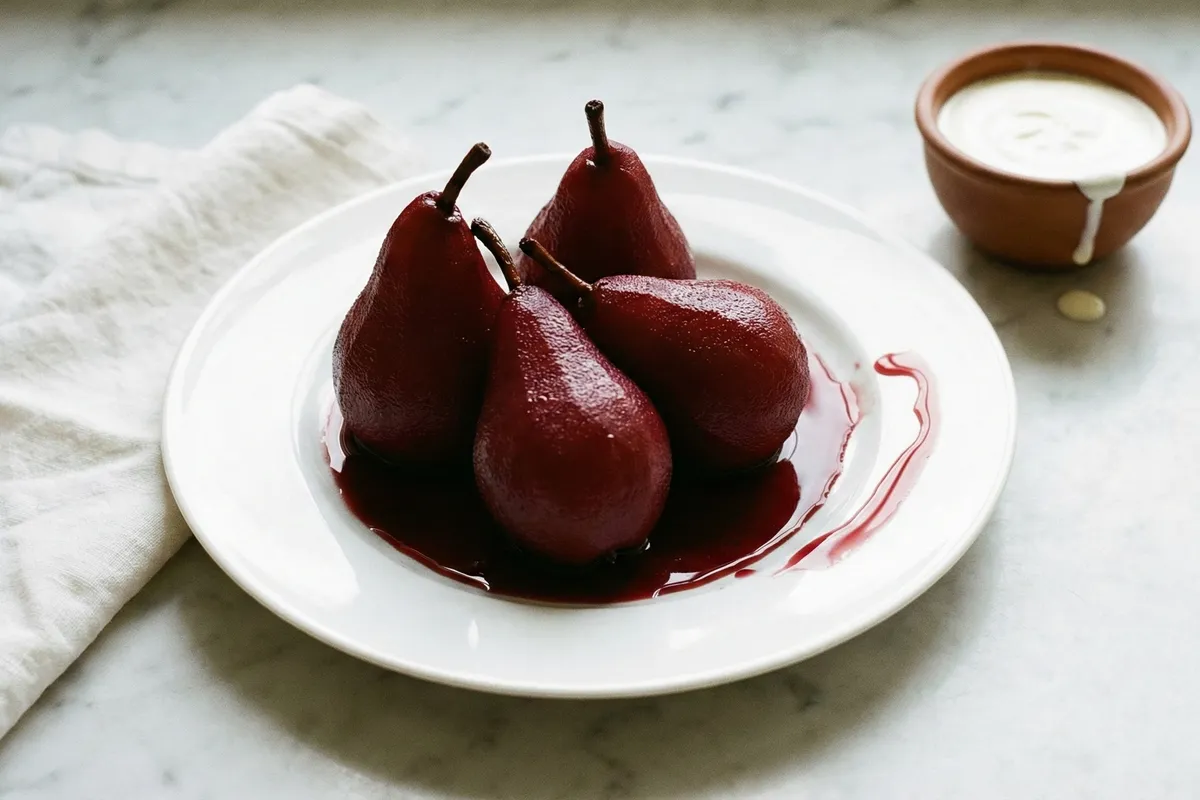
Poires pochées au vin rouge is one of the great simple desserts of the French kitchen. Whole pears are gently simmered in sweetened red wine until they absorb the liquid and turn a striking deep crimson throughout. The technique is ancient — a way of transforming firm, sometimes underripe winter pears into something tender and perfumed. The older name, poires à la bonne femme, suggests its roots in home cooking rather than restaurant kitchens, though the dish has long appeared on bistro menus across France.
The connection to Burgundy (Bourgogne) is natural. The region’s robust Pinot Noir wines are a traditional choice for the poaching liquid, and Burgundy’s deep wine culture means that cooking with wine is second nature. A Côtes du Rhône, a Beaujolais, or any honest dry red wine works well — the key is using something you would drink, not a wine you are trying to use up. The poaching liquid is kept deliberately simple: wine, sugar, and a split vanilla pod. A bay leaf and a few black peppercorns add subtle depth without overwhelming the pear. After poaching, the liquid is reduced to a glossy syrup that clings to the fruit. It is a dessert that fits perfectly at the end of a winter meal (dessert), following the cheese course (fromage).
Instructions
-
Peel the pears carefully, leaving the stems intact. Trim the base of each pear so it can stand upright if desired. Use a small melon baller or the tip of a vegetable peeler to remove the core from the bottom of each pear.
-
Split the vanilla pod (gousse de vanille) lengthwise and scrape out the seeds with the back of a knife. Reserve both the seeds and the pod.
-
In a saucepan just large enough to hold the pears snugly in a single layer, combine the dry red wine, sugar, vanilla seeds, vanilla pod, bay leaf (laurier), and black peppercorns. Stir over medium heat until the sugar dissolves.
-
Gently lower the pears into the wine. The liquid should nearly cover them — if it does not, choose a narrower pot or add a splash more wine. Place a circle of baking paper directly on the surface to keep the exposed tops submerged.
-
Bring the liquid to a gentle simmer. Do not let it boil — a few lazy bubbles rising to the surface is what you want. Reduce the heat to low and poach the pears for 25-35 minutes, turning them every 8-10 minutes so they colour evenly. The pears are done when a thin knife slides into the thickest part with no resistance and they have turned a deep, even crimson.
-
Using a slotted spoon, carefully transfer the pears to a deep plate or bowl. Remove and discard the vanilla pod, bay leaf, and peppercorns from the poaching liquid.
-
Return the saucepan to medium-high heat and reduce the poaching liquid by about half, approximately 10-15 minutes, until it thickens into a light syrup that coats the back of a spoon. Watch it closely toward the end — it can go from syrup to caramel quickly.
-
Pour the warm syrup over the pears, turning them to coat. Allow the pears to cool in the syrup for at least 30 minutes at room temperature, or refrigerate for several hours. They absorb more colour and flavour as they rest.
-
Serve the pears standing upright on individual plates, spooning the wine syrup generously around them. Add a dollop of crème fraîche alongside.
Tips
- Choose firm, slightly underripe pears. Conférence and Comice are the classic French varieties for poaching — they hold their shape without turning mushy. Williams (Bartlett) pears work but soften faster, so check them earlier.
- The pears improve with time. Made a day ahead and left to steep in their syrup in the refrigerator, they develop a deeper colour and more complex flavour. Bring them to cool room temperature before serving.
- A Burgundy Pinot Noir is the traditional wine choice, but any drinkable dry red wine will produce good results. Avoid heavily oaked wines or anything very tannic, as these can turn bitter when reduced.
- The reduced syrup should be pourable, not sticky. If you over-reduce it, stir in a tablespoon of water to loosen it back up.
- For a wine pairing, a demi-sec Vouvray or a glass of the same red wine used in the poaching makes a natural accompaniment.
Seasonal Note
Winter pears — stored from the autumn harvest — are at the heart of this dish. Conférence and Comice varieties, firm and fragrant from months in cool storage, are perfectly suited to the slow, gentle heat of poaching. This is a dessert that belongs to the colder months, when the market stalls are stacked with pears alongside apples, walnuts, and chestnuts. It requires no oven, no complicated technique, and no rare ingredients — just good fruit, honest wine, and patience. In the French winter kitchen, that simplicity is a virtue.